Understanding Zone 5B: Why Colorado Springs Attics Face Unique Challenges
Colorado Springs sits in USDA Hardiness Zone 5B, a climate classification that brings significant heating and cooling demands year-round. Winter temperatures regularly plunge below zero, while summer heat can exceed 85 degrees Fahrenheit. This dramatic temperature swing creates a punishing cycle for your attic and crawl spaces, where insulation must perform under extreme stress.
Traditional fiberglass batts were designed for moderate climates, not the intense temperature differentials that homeowners in Colorado Springs experience. When fiberglass is exposed to these swings, it settles over time, loses its R-value, and fails to seal air leaks that develop as your home's structure naturally expands and contracts. The result is energy waste, uncomfortable rooms, and higher utility bills that climb with each passing season.
The Fiberglass Problem: Why Traditional Insulation Falls Short in Colorado Springs
Fiberglass insulation has been the industry standard for decades, but it was never engineered for the demands of Zone 5B living. Fiberglass batts provide an R-value rating only when installed perfectly, with no gaps, compression, or settling. In practice, this rarely happens. Installers often compress batts around electrical wiring, plumbing, and HVAC ducts, which cuts their effectiveness by 50 percent or more. Over time, gravity and vibration cause fiberglass to settle, dropping its R-value by 15 to 20 percent within the first few years.
Beyond settling, fiberglass cannot seal air leaks. It simply fills a cavity but leaves gaps where cold air infiltrates and warm air escapes. In a Zone 5B climate, these air leaks are costly. A single gap the size of a quarter in your attic can waste as much energy as leaving a window open all winter. Fiberglass also absorbs moisture, which reduces its insulating power and can lead to mold growth in humid conditions. For homeowners concerned about energy efficiency and long-term performance, fiberglass is no longer the best choice.
Crawl Space Insulation and Cold Floors: A Zone 5B Reality
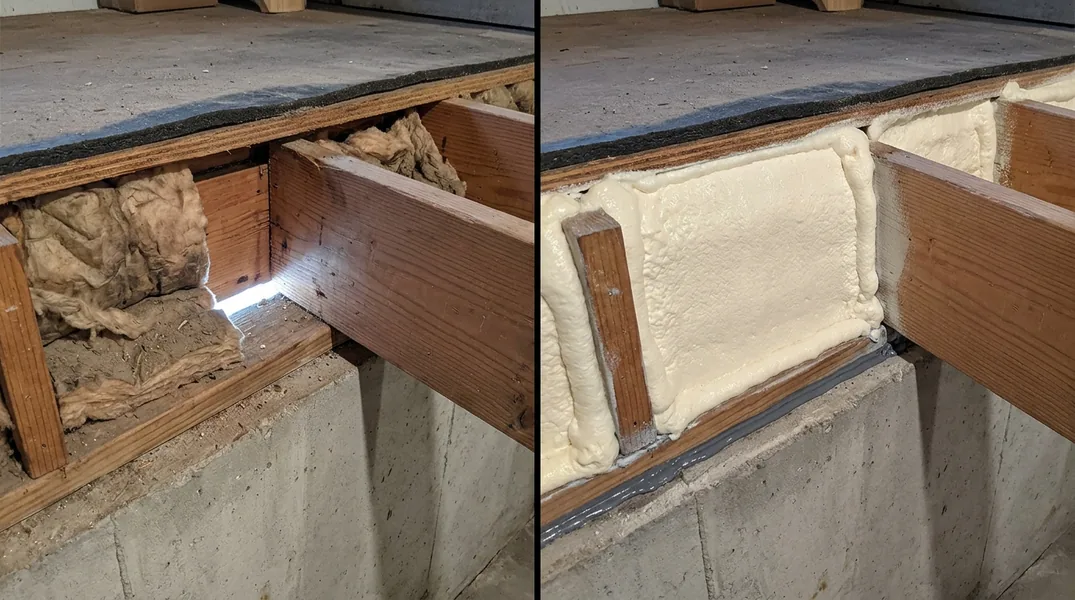
If your home in Colorado Springs has a crawl space or pier and beam foundation, you understand the frustration of cold floors. Crawl spaces are notoriously difficult to insulate with fiberglass because they are damp, uneven, and prone to air infiltration from the ground. Standard crawl space insulation methods involve batts stapled between joists, but this approach leaves gaps around pipes, wiring, and irregular framing. Cold air flows freely through these openings, making ground floors uncomfortably chilly even when your heating system runs constantly.
Crawl space spray foam solves this problem by creating an air-tight thermal barrier that conforms to any shape or obstruction. Closed Cell Spray Foam Insulation is particularly effective in crawl spaces because it resists moisture, maintains its R-value indefinitely, and seals every crack and crevice. The result is warmer floors, more consistent indoor temperatures, and measurable reductions in heating costs. For Fountain and surrounding areas with similar climate conditions, crawl space spray foam is often the most cost-effective upgrade homeowners can make.
Why Spray Foam Outperforms Fiberglass in Zone 5B Climates
Attic Spray Foam Insulation delivers superior performance in Zone 5B for several critical reasons. First, spray foam expands to fill every cavity, gap, and void without settling. Its R-value remains constant for decades, providing reliable insulation year after year. Second, spray foam seals air leaks at the source. When applied correctly, it creates a continuous air barrier that prevents infiltration and exfiltration, which is the primary cause of energy loss in most homes. This air-sealing capability alone can reduce heating and cooling costs by 20 to 30 percent compared to fiberglass.
The choice between Closed Cell Spray Foam Insulation and Open Cell Spray Foam Insulation depends on your specific needs. Closed cell foam offers higher R-value per inch, superior moisture resistance, and structural support, making it ideal for attics, crawl spaces, and pier and beam insulation applications in Colorado. Open cell foam is more affordable, breathable, and suitable for interior walls where moisture management is less critical. Both options outperform fiberglass in durability, air sealing, and long-term value. For homeowners serious about controlling energy costs in a Zone 5B climate, spray foam is the clear winner.
Best Insulation for Crawl Space: Why Spray Foam Wins Over Fiberglass and Batts
When evaluating the best insulation for crawl space applications, spray foam consistently outperforms traditional methods. Crawl spaces are inherently challenging because they sit between the ground and your living space, exposing them to moisture, temperature fluctuations, and pest infiltration. Fiberglass batts cannot handle this environment. They absorb ground moisture, compress under their own weight, and fail to prevent air leaks that allow cold ground air to chill your floors. Many homeowners who insulate crawl spaces with fiberglass find that cold floors persist and heating bills remain high.
Spray foam addresses these problems comprehensively. Closed Cell Spray Foam Insulation resists moisture intrusion, maintains structural integrity, and creates a thermal and air barrier that eliminates cold floor problems. It also prevents pest entry and reduces radon infiltration, which is a concern in many Colorado homes. The upfront cost of spray foam is higher than fiberglass, but the energy savings, durability, and elimination of cold floors make it the most cost-effective solution over the life of your home. For homeowners in Colorado Springs dealing with persistent cold floors and high heating bills, spray foam crawl space insulation is the answer.
Attic Spray Foam Insulation Cost in Colorado Springs: What to Budget
The pricing for spray foam insulation varies based on attic size, foam type, and existing conditions. In Colorado Springs, homeowners typically invest between $1,500 and $5,000 for a complete attic spray foam project, depending on square footage and whether air sealing is included. Closed Cell Spray Foam Insulation costs more per square foot than open cell, but delivers higher R-value and superior moisture resistance, making it the preferred choice for Zone 5B attics. The investment pays for itself through energy savings within five to ten years for most homeowners, and spray foam lasts 30 years or longer without degradation.
To understand the true cost-benefit of spray foam for your specific home, we recommend requesting a free estimate from Colorado Springs Spray Foam Insulation. Our team will evaluate your attic, crawl space, or other insulation needs and provide transparent pricing based on your situation. We serve Colorado Springs and surrounding areas, and we're committed to helping homeowners make informed decisions about insulation upgrades. Call us at (719) 722-2568 to schedule your consultation today.
Looking for a professional spray foam insulation contractor in Colorado Springs? Colorado Springs Spray Foam Insulation responds fast for all your spray foam insulation needs.
Get a Free Quote