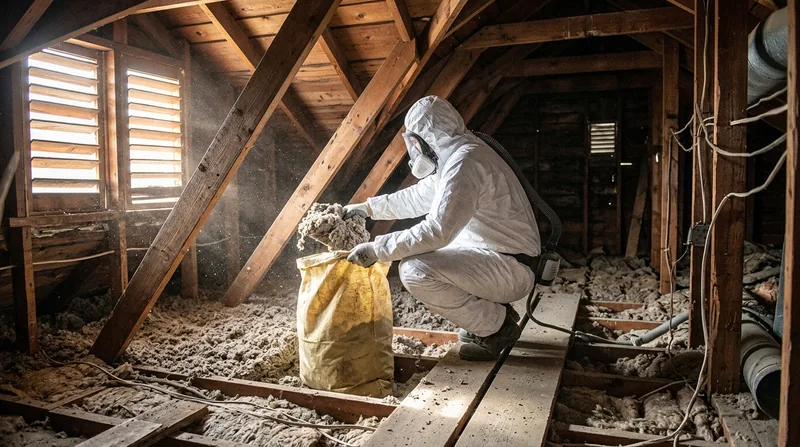




Old, flattened attic insulation in mid-century Colorado Springs homes stops doing its job long before the house does. Insulation removal in Colorado Springs is the first step toward fixing that problem. At the foot of Pikes Peak, where winter cold snaps and constant Front Range wind drive heating bills upward, failed insulation becomes a liability. We remove deteriorated fiberglass, cellulose, or failed foam from attics, walls, and crawl spaces before replacing it with spray foam suited to this dry, windy climate. Whether your home sits in Old Colorado City near downtown, in the mid-century neighborhoods around the Broadmoor, or in newer subdivisions toward Monument and Fountain, removal clears the path for a real upgrade. Call us at (719) 722-2568 for a free estimate, or visit our attic spray foam insulation page to see what comes next.
Why Insulation Removal Matters in Colorado Springs' Cold, Windy Climate
Colorado Springs sits in IECC climate zone 5B with heating-dominated winters, low humidity, and persistent wind that finds every gap. Attics in homes built before 1990 were often insulated with fiberglass batts or blown-in cellulose rated for conditions that no longer match reality. That insulation compresses, settles unevenly, and loses R-value over decades. Meanwhile, rim joists above basements, band joists around foundations, and wall cavities in uninsulated older homes leak conditioned air constantly. Simply adding new insulation over failed material wastes money and creates a thermal barrier that traps moisture against the substrate, a problem even in this dry climate when the substrate itself is compromised.
- Flattened attic insulation loses R-value and lets winter heat escape directly through the roof deck.
- Cellulose that has settled into the bottom of wall cavities leaves upper cavities uninsulated and drafty.
- Failed foam or wet insulation in crawl spaces promotes mold and foundation damage.
- Removing old insulation reveals air leaks, penetrations, and structural problems that new foam must address.
- Clean removal prevents contamination of new insulation and ensures proper substrate preparation.
Removal is not optional for a retrofit that will last. It is the precondition of every honest insulation upgrade in Colorado Springs.
Key info: Attics in homes around the Broadmoor and across Security-Widefield often show 2 to 4 inches of settled cellulose mixed with fiberglass batts. A single removal job can uncover a dozen air leaks where conduit, plumbing, and electrical penetrate the ceiling. That is why removal and air sealing are inseparable in Colorado Springs.
For details on what removal reveals and how it prepares your home for spray foam, see our air sealing page.
How We Remove Insulation in Colorado Springs: A Step-by-Step Process
Removal is precise work, not demolition. We isolate the work area, use mechanical ventilation to contain dust and debris, and dispose of material legally and responsibly. In Colorado Springs, where homes sit on basements and attics are often accessible only through small hatches, we plan each job for safety and efficiency. Removal from walls requires careful drilling and extraction; removal from attics requires temporary containment and staged hauling. Every job starts with an on-site assessment to identify what material is present, whether it is wet or contaminated, and what substrate condition we will find underneath.
- We inspect the existing insulation and document its type, depth, and condition.
- We set up containment barriers and mechanical ventilation to control dust and particulates.
- We remove insulation carefully, working from one zone to the next to avoid spreading debris.
- We dispose of all material at a licensed facility and provide documentation of removal.
- We clean and prepare the substrate before any new insulation is installed.
- We inspect the space for air leaks, moisture, and structural issues that affect the new installation.
The whole process protects your home and ensures the new insulation has a sound foundation.
Local example: A home in Woodland Park with a vented attic built in 1975 had 3.5 inches of cellulose over the original batts, totaling roughly R-20 by then reduced to R-12 by settling. Removal took one day, revealed four major gaps around the chimney penetration and the attic hatch, and left the substrate clean and ready for closed cell foam. The homeowner moved from a 2,800 sq ft attic costing $180 a month to heat in winter to a sealed attic that cut that cost by 40 percent within the first season.
For more on what comes after removal, visit our closed cell spray foam page to see the best option for Colorado Springs' climate.
Removal Methods: Approach and Application
| Approach | Description | Best for |
|---|---|---|
| Attic Removal | Mechanical extraction of fiberglass, cellulose, or failed foam from attic cavities using containment and ventilation. | Vented attics with settled or flattened insulation in Colorado Springs homes built before 1995. |
| Wall Cavity Removal | Careful drilling and extraction of old insulation from closed wall cavities without disturbing the drywall or exterior. | Older homes with uninsulated or poorly insulated walls that will be retrofitted with injection foam. |
| Crawl Space Removal | Extraction of deteriorated insulation, old vapor barriers, and debris from foundation cavities and rim joists. | Basements and crawl spaces with wet, moldy, or failed insulation that must be cleared before spray foam is applied. |
| Selective Removal | Targeted removal of failed sections, wet areas, or contaminated material while preserving sound insulation elsewhere. | Homes where only part of the insulation has failed or where moisture damage is isolated to one zone. |
Insulation Removal Cost in Colorado Springs: What to Expect
The cost of insulation removal in Colorado Springs depends on the size of the space, the type and depth of material being removed, access difficulty, and disposal requirements. A typical attic removal in a 2,000 to 2,500 sq ft home starts at around $950 and can range up to $2,500 or more if the space is large, the material is contaminated, or access is limited. Wall cavity removal for a full retrofit is priced per linear foot of wall and per cavity. Crawl space removal, which often involves hauling wet or moldy material, typically costs more because of the hazard and disposal. We provide a written estimate on site that breaks down labor, material, disposal, and any unforeseen costs before we begin.
- Attic size and insulation depth are the primary cost drivers for removal.
- Access difficulty, such as small hatches or limited ventilation, increases labor time and cost.
- Contaminated or wet material requires special handling and disposal, raising the price.
- The type of material being removed (fiberglass, cellulose, foam) affects disposal fees and labor speed.
- Travel within Colorado Springs and surrounding areas is included in the estimate.
A free estimate from us includes a walk-through of the space, identification of the material, and a clear price for removal. We respond within 24 hours at (719) 722-2568. See our full pricing page for more detail on removal costs and what follows.
Insulation Removal Near Me: What Colorado Springs Homeowners Should Know When Hiring
Not every contractor who removes insulation is qualified to install the new system. Look for a contractor who is fully insured and who has experience with the type of removal your home needs and the climate challenges of Colorado Springs. Ask for references from recent jobs in your area, whether near Monument, Fountain, Security-Widefield, or downtown. Request a written estimate that lists what will be removed, the disposal method, and the price. Verify that the contractor understands local permitting and building code requirements for your zip code. Ask whether they will inspect and document the substrate before leaving, and whether they offer a workmanship warranty on the installation that follows.
- Verify that the contractor carries liability insurance and can provide a current certificate on request.
- Ask for at least two references from homes in Colorado Springs removed and re-insulated in the past two years.
- Request a written estimate that itemizes removal labor, material disposal, and any travel fees.
- Confirm that the contractor will pull any permits required by your city or county building department.
- Understand that removal and air sealing often reveal issues that affect the scope and cost of the new installation.
- Ask whether the contractor will provide before-and-after photos and a signed scope of work.
A contractor who removes insulation carelessly, without containment or ventilation, or who promises immediate re-occupancy is a red flag. Removal and replacement should be planned as a single project, not two separate jobs. Contact us today for a free estimate and to discuss what removal and re-insulation will cost for your Colorado Springs home.
Insulation Removal in Colorado Springs: Pricing Guide
| Service | Price | Details |
|---|---|---|
| Attic Removal | Starting at $950 | Removal of fiberglass, cellulose, or failed foam from attics up to 2,000 sq ft, includes containment and disposal |
| Wall Cavity Removal | Starting at $1,200 | Extraction of insulation from closed cavities prior to injection foam retrofit, priced per linear foot of wall |
| Crawl Space or Rim Joist Removal | Starting at $1,400 | Removal of wet, moldy, or failed insulation from foundation areas, includes special handling and licensed disposal |
| Large or Complex Removal | On Estimate | Multi-zone jobs, contaminated material, or difficult access require on-site inspection before pricing |
| Travel | Included | No separate mileage fee within Colorado Springs and surrounding service areas |
| Free Estimate | Free | On-site walkthrough with written quote, response within 24 hours at (719) 722-2568 |
Indicative pricing, the exact cost depends on square footage, finish, and site access. Free personalized estimate within 24h at (719) 722-2568.


