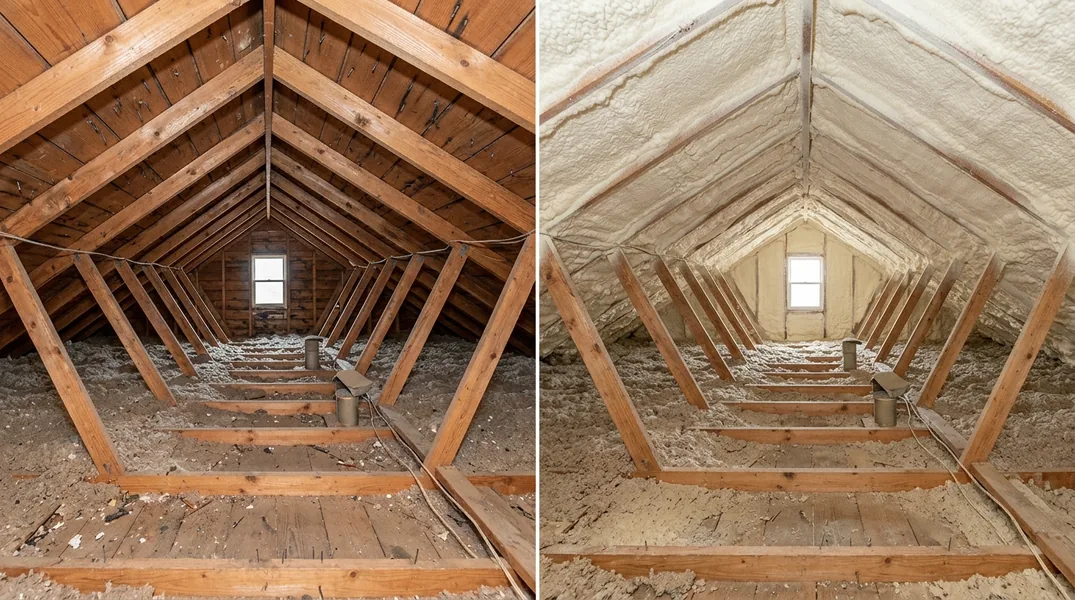
Understanding Spray Foam Insulation for Colorado Springs Attics
When it comes to keeping your Colorado Springs home comfortable year-round, few solutions rival the effectiveness of Attic Spray Foam Insulation. Whether you're dealing with harsh winters or the intense summer heat that the region experiences, your attic plays a critical role in maintaining indoor temperatures and reducing energy costs. However, not all spray foam insulation is created equal, and understanding the differences between open cell and closed cell varieties is essential before making an investment in your home.
Spray foam insulation has revolutionized how homeowners approach energy efficiency. Unlike traditional fiberglass batts or blown-in cellulose, spray foam expands to fill every cavity, crack, and gap in your attic space. This comprehensive coverage creates an air-tight seal that prevents heat loss in winter and heat gain in summer. For homeowners in Colorado Springs dealing with temperature fluctuations and varying humidity levels, this level of performance can mean significant savings on heating and cooling bills while improving indoor air quality and comfort.
What is Open Cell Spray Foam Insulation?
Open Cell Spray Foam Insulation is a lighter, more flexible material that expands significantly after application. The cells in this type of foam are not completely closed, which means air can move through the foam structure itself. This characteristic gives open cell foam a sponge-like appearance and makes it softer to the touch than its closed cell counterpart. When applied to your attic, open cell foam typically reaches an R-value of approximately 3.6 per inch, making it an effective insulator for many applications.
One of the primary advantages of open cell foam is its cost-effectiveness. It generally costs less per board foot than closed cell foam, making it an attractive option for homeowners working within a budget. Additionally, open cell foam is excellent for sound dampening and provides good air sealing properties. However, because the cells are open, this type of foam is more permeable to moisture and air vapor. This means it's less effective as a vapor barrier and may not be ideal for areas prone to moisture intrusion. In Colorado Springs, where the climate can be relatively dry but occasional moisture issues can arise, this is an important consideration for your attic insulation strategy.
The Benefits and Drawbacks of Closed Cell Spray Foam Insulation
Closed Cell Spray Foam Insulation features cells that are completely enclosed, creating a denser, more rigid foam structure. This closed-cell design delivers superior insulating performance, with an R-value of approximately 6.0 to 6.5 per inch, nearly double that of open cell foam. The density and rigidity of closed cell foam also provide additional structural benefits, actually adding strength to your attic framing and roof structure. For homeowners seeking maximum insulation performance and long-term durability, closed cell foam represents a premium option.
The closed-cell structure creates an exceptional vapor barrier, making this foam ideal for areas where moisture control is critical. This characteristic makes closed cell foam particularly valuable in sealed attic applications where you want to create a fully conditioned attic space. The superior moisture resistance means closed cell foam won't absorb water and can actually help protect your home from potential water damage. The trade-off is that closed cell foam typically costs more than open cell alternatives. However, many homeowners find the investment worthwhile when considering the superior R-value, moisture protection, and structural reinforcement benefits. Additionally, closed cell foam tends to have a longer lifespan and maintains its performance characteristics over decades of use.
Sealed Attic Insulation: Creating a Conditioned Space
One of the most significant trends in modern home insulation is the concept of sealed attic insulation, particularly through unvented attic spray foam applications. Rather than treating the attic as an unconditioned buffer space, many homeowners are now creating fully sealed, insulated attics that function as part of the conditioned living envelope of the home. This approach involves sealing all air leaks and applying spray foam to the roof deck rather than the attic floor, effectively bringing the attic into the thermal boundary of your home.
For Colorado Springs homeowners, a sealed attic offers numerous advantages. By creating an unvented attic space, you eliminate the temperature swings that occur in traditional vented attics, reducing strain on HVAC systems and extending their lifespan. This approach also protects sensitive items stored in your attic from extreme temperature and humidity fluctuations. The sealed attic method works exceptionally well when combined with closed cell foam, as the foam's vapor barrier properties prevent moisture accumulation within the sealed cavity. Additionally, a properly sealed and insulated attic can significantly reduce heating and cooling costs, with some homeowners reporting energy savings of 15 to 20 percent or more. If you're considering this approach for your home, contacting Colorado Springs Spray Foam Insulation for a free estimate can help you determine if this solution is right for your specific situation.
Attic Spray Foam Insulation Cost in Colorado Springs: What to Budget
Understanding the financial investment required for spray foam attic insulation is an important part of the decision-making process. The pricing for spray foam insulation varies based on several factors, including the type of foam selected, the size of your attic space, existing conditions, and the specific application method. Open cell foam typically ranges from $0.50 to $1.00 per board foot, while closed cell foam generally costs between $1.00 and $1.50 per board foot. For a typical attic space in Colorado Springs, total costs can range from $2,000 to $8,000 or more, depending on these variables.
While spray foam insulation represents a higher upfront investment compared to traditional insulation methods, it's important to consider the long-term financial benefits. The superior R-value and air-sealing properties of spray foam mean lower energy bills month after month. Many homeowners recoup their initial investment within five to ten years through reduced heating and cooling costs. Additionally, some utility companies and government programs offer rebates or tax credits for energy-efficient home improvements, which can help offset the initial expense. Colorado Springs Spray Foam Insulation can provide detailed information about available incentives and help you understand the true cost-benefit analysis for your specific project. We encourage you to reach out at (719) 722-2568 or request a free estimate to get accurate pricing tailored to your home's needs.
Choosing the Right Spray Foam for Your Colorado Springs Home
Selecting between open cell and closed cell spray foam ultimately depends on your specific needs, budget, and long-term goals for your home. If you're primarily focused on cost-effective insulation and sound dampening, and your attic is in a relatively dry environment, open cell foam may be an excellent choice. However, if you prioritize maximum energy efficiency, moisture protection, and want to create a sealed attic space, closed cell foam offers superior performance despite its higher price point.
The climate in Colorado Springs presents unique considerations for this decision. The region experiences relatively low humidity levels but can experience temperature swings that stress traditional insulation systems. A sealed attic with closed cell foam can effectively mitigate these challenges and provide consistent comfort throughout the year. Your attic's current condition, ventilation setup, and whether you plan to use the attic space for storage or future living area should also influence your decision. Colorado Springs Spray Foam Insulation specializes in helping homeowners evaluate these factors and select the insulation solution that delivers the best value and performance for their unique situation. Contact us today at (719) 722-2568 to discuss your options and schedule a consultation with our experienced team.
Looking for a professional spray foam insulation contractor in Colorado Springs? Colorado Springs Spray Foam Insulation responds fast for all your spray foam insulation needs.
Get a Free Quote