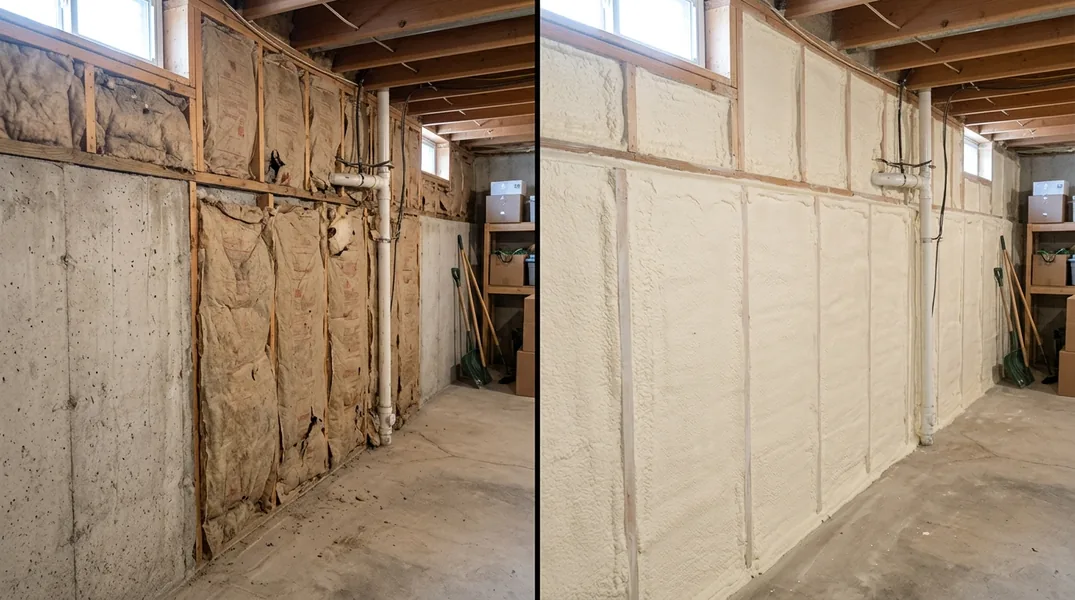
Why Historic Colorado Springs Homes Need Modern Insulation Solutions
Older homes in Colorado Springs have undeniable character. Their original woodwork, vintage fixtures, and architectural details tell the story of Colorado's frontier heritage. But that charm often comes with a hidden cost: poor insulation and significant energy waste. Many historic homes were built with minimal insulation or materials that have degraded over decades, leaving homeowners facing high heating and cooling bills while struggling to maintain comfortable indoor temperatures year-round.
The challenge for homeowners in older Colorado City neighborhoods is finding an insulation upgrade that improves energy performance without compromising the home's original aesthetic or structural integrity. Traditional insulation methods like fiberglass batts require extensive wall cavities to be opened, potentially damaging plaster, original siding, and interior finishes. This is where Attic Spray Foam Insulation offers a compelling solution. Modern spray foam technology allows contractors to insulate hard-to-reach spaces, seal air leaks, and improve thermal performance without the invasive demolition that would harm your home's historic value.
Is Spray Foam Insulation Worth It for Older Homes?
When evaluating whether spray foam insulation is worth the investment, historic homeowners must weigh several factors unique to older properties. Unlike new construction, where spray foam is one option among many, older homes often benefit disproportionately from spray foam's superior air sealing properties. Historic homes typically have numerous air leaks around window frames, door jambs, foundation cracks, and irregular wall cavities that traditional insulation cannot adequately address. By sealing these gaps, spray foam can reduce heating and cooling costs by 15 to 30 percent, depending on the home's current condition and your local climate.
The return on investment becomes clearer when you consider the long-term energy savings alongside the preservation of your home's character. Closed Cell Spray Foam Insulation provides an R-value of approximately 6.5 to 7.0 per inch, meaning you need less material to achieve the same thermal resistance as fiberglass. This efficiency is particularly valuable in attics and crawl spaces where space is limited. Additionally, spray foam's durability means you won't face the settling and degradation issues common with older insulation materials. For homeowners in Colorado Springs committed to preserving their historic properties, the combination of energy savings, minimal aesthetic disruption, and long-term performance often makes spray foam a worthwhile choice.
Is Spray Foam Insulation Safe? Understanding Health and Safety Concerns
Safety is a legitimate concern when considering any insulation material, and it's especially important for homeowners living in older properties where air quality and indoor environmental health matter greatly. The good news is that spray foam insulation, when properly installed by licensed professionals, is safe for residential use. The material has been used in homes for over three decades and is approved by the EPA and building codes across the United States. However, understanding the difference between installation safety and long-term safety is crucial for making an informed decision.
During application, spray foam releases isocyanates and other volatile organic compounds (VOCs) that require proper ventilation and protective equipment. This is why professional installation is non-negotiable, not optional. Trained technicians use respirators, protective clothing, and ensure adequate ventilation during the spraying process. Once fully cured (typically 24 hours), spray foam poses no ongoing health risk to occupants. The material becomes inert and does not off-gas in any meaningful way after curing. For historic homeowners concerned about indoor air quality, this distinction matters: the brief application period requires precautions, but the finished product is stable and safe for long-term occupancy.
Spray Foam Insulation Problems and Off-Gassing: What You Should Know
While spray foam is generally safe when installed correctly, understanding potential problems helps you make a confident decision. One concern homeowners often hear about is off-gassing. Spray foam off-gassing refers to the release of volatile organic compounds during and immediately after application. This is why proper ventilation during installation is essential, and why you should leave the home or seal off the insulated area for at least 24 hours after application. Once cured, quality spray foam does not continue to off-gas in any significant amount. The material becomes chemically stable, and any residual odor typically dissipates within days.
Other spray foam insulation problems worth considering include improper application, which can lead to incomplete coverage or inadequate curing. If spray foam is applied in cold temperatures or with poor humidity control, it may not expand or cure properly, reducing its effectiveness. This underscores why hiring experienced professionals in Colorado Springs is critical. Additionally, some homeowners worry about moisture issues or foam degradation over time. High-quality closed-cell foam resists moisture absorption and maintains its structural integrity for decades. Open-cell foam is more permeable and better suited to certain applications. Choosing the right foam type for your specific situation, guided by a knowledgeable contractor, prevents most common problems before they start.
Spray Foam Insulation Pros and Cons: A Balanced Look for Historic Homeowners
Understanding the full spectrum of spray foam insulation pros and cons helps historic homeowners decide if this technology aligns with their renovation goals. The major advantages include superior air sealing, high R-value per inch, moisture resistance (with closed-cell foam), and minimal disruption to existing structures. For older homes where air leaks are the primary energy efficiency problem, spray foam delivers results that traditional insulation simply cannot match. The material also lasts 50 years or more without settling or degrading, making it a sound long-term investment. Another significant pro is that spray foam can be applied to irregular spaces, around existing wiring and plumbing, and in cavities that would be difficult or impossible to insulate with batts or blown-in materials.
On the con side, spray foam has a higher upfront cost than fiberglass or cellulose insulation. Initial pricing may seem steep, though the long-term energy savings often justify the expense. Another consideration is that spray foam application requires professional installation, unlike some DIY insulation options. Additionally, once spray foam is installed, it is difficult to remove or modify if future renovations are needed. For homeowners planning significant structural changes to their historic homes, this permanence could be a drawback. Finally, while spray foam is safe when properly installed, the application process itself requires careful management of off-gassing and ventilation, meaning you cannot simply hire any contractor, it must be someone experienced and qualified.
Wall & Injection Foam Insulation Near Me: Protecting Historic Walls Without Demolition
Wall & Injection Foam Insulation is particularly valuable for historic homes because it allows you to insulate existing walls without tearing into original plaster, lath, or exterior finishes. Injection foam is applied through small holes drilled into walls, then fills the cavity completely. The holes are then sealed, leaving minimal visual trace. This method is ideal for historic properties where preserving original wall surfaces is a priority. Whether your Colorado City home has solid brick, adobe, or wood-frame construction, injection foam can be tailored to your specific wall composition and needs.
The process begins with a professional assessment to determine wall composition, moisture conditions, and the best injection points. Technicians then use specialized equipment to inject expanding foam into the cavities, ensuring complete fill without voids. Once cured, the small access holes are patched and finished to match your existing walls. For homeowners in Colorado Springs with historic exterior walls that need insulation, this approach delivers energy efficiency while respecting architectural integrity. If you're considering wall insulation for your older home, contact Colorado Springs Spray Foam Insulation at (719) 722-2568 to discuss how injection foam can work for your specific situation.
Making the Decision: Getting a Free Estimate for Your Historic Home
Deciding whether to invest in spray foam insulation for your historic Colorado Springs home requires understanding your home's current condition, your energy efficiency goals, and your budget. The best first step is scheduling a professional assessment with a contractor experienced in older properties. During this consultation, a technician can evaluate your attic, crawl spaces, walls, and foundation to identify where insulation improvements will have the greatest impact. They can also answer your specific questions about safety, off-gassing, and how spray foam will interact with your home's existing materials and systems.
Colorado Springs Spray Foam Insulation offers a free estimate for homeowners considering spray foam upgrades. This no-obligation consultation gives you concrete information about what spray foam can accomplish for your specific property, realistic cost expectations, and a timeline for the work. Whether you're insulating an attic, sealing walls with injection foam, or addressing multiple areas of your home, a professional assessment ensures you make decisions based on facts rather than assumptions. Reach out today at (719) 722-2568 or visit the website to request your free estimate and take the first step toward a more energy-efficient historic home.
Looking for a professional spray foam insulation contractor in Colorado Springs? Colorado Springs Spray Foam Insulation responds fast for all your spray foam insulation needs.
Get a Free Quote